
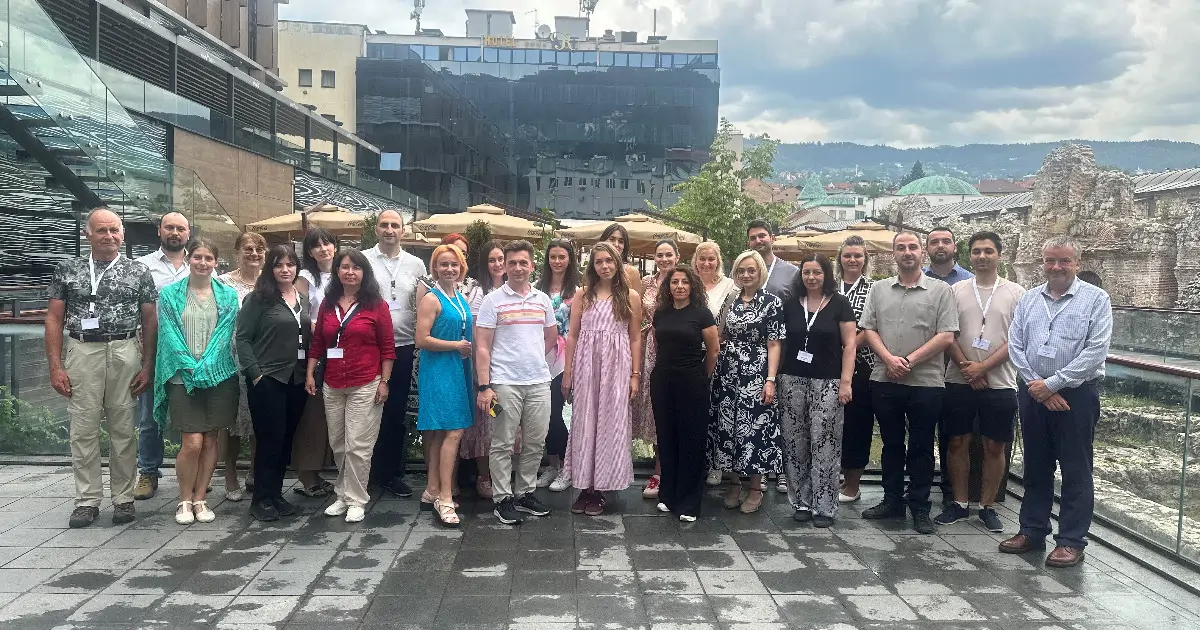
From 29 June to 3 July 2026, Sarajevo hosted the regional training course entitled “Regional Training Course on the Implementation of the Requirements of ISO/IEC 17025:2017 in Secondary Standard Dosimetry Laboratories, including Risk Assessment and Internal Audits.”
The training was organized within the framework of the International Atomic Energy Agency (IAEA) technical cooperation project **RER 6046 – “Strengthening Ionizing Radiation Metrology in Europe and Central Asia”, aimed at strengthening metrology capacities in the field of ionizing radiation.
The host and organizer of the event was the Institute of Metrology of Bosnia and Herzegovina (IMBiH). The training brought together experts from 14 countries across the region. The main focus was on the practical implementation of the requirements of the ISO/IEC 17025:2017 standard, with particular emphasis on quality management systems, risk assessment, and internal audits in Secondary Standard Dosimetry Laboratories (SSDLs).
During the five-day programme, participants took part in lectures, discussions, and practical exercises focused on improving quality management systems, exchanging experiences, developing risk registers, conducting mutual internal audits, as well as addressing topics such as method validation and data control.
The training represents an important contribution to strengthening regional cooperation and improving the metrology infrastructure for ionizing radiation. Reliable measurements and accurate calibration of measuring instruments are essential for the safe and effective use of radiation in medicine, including radiotherapy, diagnostic radiology, and nuclear medicine. At the same time, these processes play a crucial role in establishing and improving radiation protection protocols, ensuring an appropriate level of safety for patients, occupationally exposed workers, and the general public.
The event concluded with presentations of group work results and expert discussions, highlighting the importance of continuous knowledge exchange and cooperation among laboratories from Europe and Central Asia.


 © 2020 Institute of metrology of Bosnia and Herzegovina